“`html
The Core Principles of SOLID Design Pattern
In the realm of software development, design principles provide a foundation for managing code complexity. The SOLID principles are an essential part of object-oriented programming that aim to make software designs more understandable, flexible, and maintainable. This blog post delves into each of the five SOLID principles, offering insights and detailed explanations to help developers and students alike better understand these guidelines. We will explore each principle with practical examples and discuss why adhering to these principles can lead to more robust and scalable software solutions.
What We’ll Cover
In this blog post, we will explore the five core principles that make up the SOLID design principles, which are integral to effective software design:
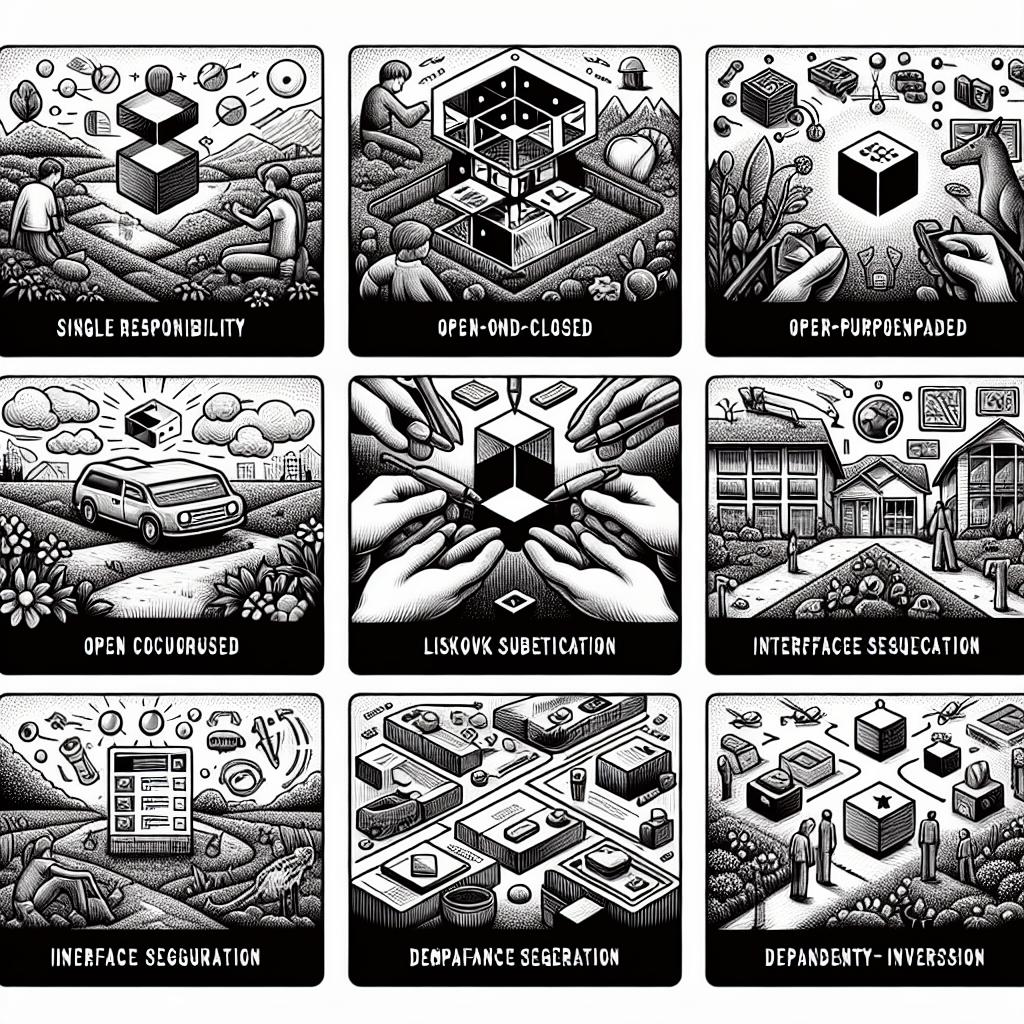
- The Single Responsibility Principle (SRP)
- The Open-Closed Principle (OCP)
- The Liskov Substitution Principle (LSP)
- The Interface Segregation Principle (ISP)
- The Dependency Inversion Principle (DIP)
What are SOLID Design Principles?
SOLID is an acronym for five design principles intended to make software design more understandable, flexible, and maintainable. These principles were introduced by Robert C. Martin, also known as Uncle Bob, and represent the cornerstone of good software architecture. By understanding and applying these principles, developers can create systems that are easier to manage and evolve over time.
The SOLID principles are particularly beneficial in scenarios where the goal is to handle complex codebases with ease. They help in minimizing dependencies and maximizing code reuse, which results in more extensible and testable software.
The Single Responsibility Principle (SRP)
The Single Responsibility Principle stipulates that a class should have only one reason to change, meaning it should have only one job or responsibility. This principle encourages separation of concerns within the codebase, ensuring that each class or module is responsible for a single piece of functionality.
By following SRP, developers can achieve cleaner architectures where each part of the code has a distinct role. This reduces the likelihood of side effects and makes it easier to troubleshoot and update specific functionalities without affecting others.
The Open-Closed Principle (OCP)
The Open-Closed Principle asserts that software entities such as classes, modules, and functions should be open for extension but closed for modification. This means you should be able to add new functionalities to an existing class without altering its existing code, which enhances the system’s stability and prevents the introduction of new bugs.
OCP is typically achieved through abstraction and the use of interfaces or base classes. Through these techniques, developers can create systems that accommodate new requirements seamlessly while maintaining the integrity of existing code.
The Liskov Substitution Principle (LSP)
The Liskov Substitution Principle states that objects of a superclass should be replaceable with objects of its subclasses without affecting the correctness of the program. Essentially, this calls for subclasses to extend the functionality of a superclass without altering its contract.
Adhering to LSP ensures that derived classes maintain the behavior expected of their base classes, facilitating polymorphism and enabling more reliable and predictable software design. Violating LSP could result in unexpected behavior when substituting subclasses for their parent classes.
The Interface Segregation Principle (ISP)
The Interface Segregation Principle advises that clients should not be forced to depend on interfaces they do not use. Essentially, it promotes the development of smaller, more specific interfaces over a large, general-purpose one.
By adhering to ISP, developers create systems with more focused and cohesive interfaces, reducing the complexity for clients and enhancing system modularity. This results in more manageable and less error-prone code because clients only need to be concerned with the specific interfaces relevant to their needs.
The Dependency Inversion Principle (DIP)
The Dependency Inversion Principle promotes the idea that high-level modules should not depend on low-level modules, but both should depend on abstractions. Additionally, abstractions should not depend on details; details should depend on abstractions.
Implementing DIP enables flexibility and reuse in code by decoupling high-level and low-level components. This can often be achieved through the use of interfaces or abstract classes that define the behavior required by the higher-level components, allowing for different implementations without altering the high-level logic.
Future Prospects
Incorporating the SOLID principles into software design can dramatically improve the quality and agility of the codebase. These principles guide developers toward creating systems that are easier to understand, extend, and maintain—qualities that are increasingly important in the fast-evolving tech industry.
| SOLID Principle | Description |
|---|---|
| Single Responsibility Principle (SRP) | A class should have only one reason to change. |
| Open-Closed Principle (OCP) | Entities should be open for extension but closed for modification. |
| Liskov Substitution Principle (LSP) | Subtypes should be replaceable for their base types without affecting correctness. |
| Interface Segregation Principle (ISP) | Clients should not be forced to depend on interfaces they do not use. |
| Dependency Inversion Principle (DIP) | High-level modules should not depend on low-level modules; both should depend on abstractions. |
By adhering to these principles, developers create more resilient, cleaner, and adaptive systems, positioning their projects for future success in a world where change is the only constant.
“`