“`html
Understanding Software Architecture Elements
Software architecture serves as the foundational blueprint that guides the design and development of software applications. The structure of software architecture determines how a system will function, scale, and interact with users and other systems. In this article, we delve into the core elements of software architecture, focusing on five distinct architectural patterns: Layered, Microkernel, Microservices, Event-based, and Space-based Architectures. By exploring their unique characteristics and applicable scenarios, we aim to provide a comprehensive understanding that can assist in selecting the ideal architecture for specific project needs. Let’s dive into each of these architectures to uncover their strengths and best usage scenarios.
The Definition
Software architecture refers to the high-level structure of a software system, outlining its components and the relationships between them. It encompasses significant decisions regarding design, technology stack, and modules that will form the backbone of any software system. The main objective of software architecture is to balance functional and non-functional requirements to ensure the system’s performance, reliability, scalability, and maintainability.
Different architectural patterns address various needs and use cases, making it essential to understand their elements and how they can best be applied. Architectures serve as a guide to avoid common pitfalls and adhere to best practices during development. A well-thought-out architecture not only simplifies development but also enhances the system’s ability to evolve with changing business requirements.
1. Layered Architecture Pattern
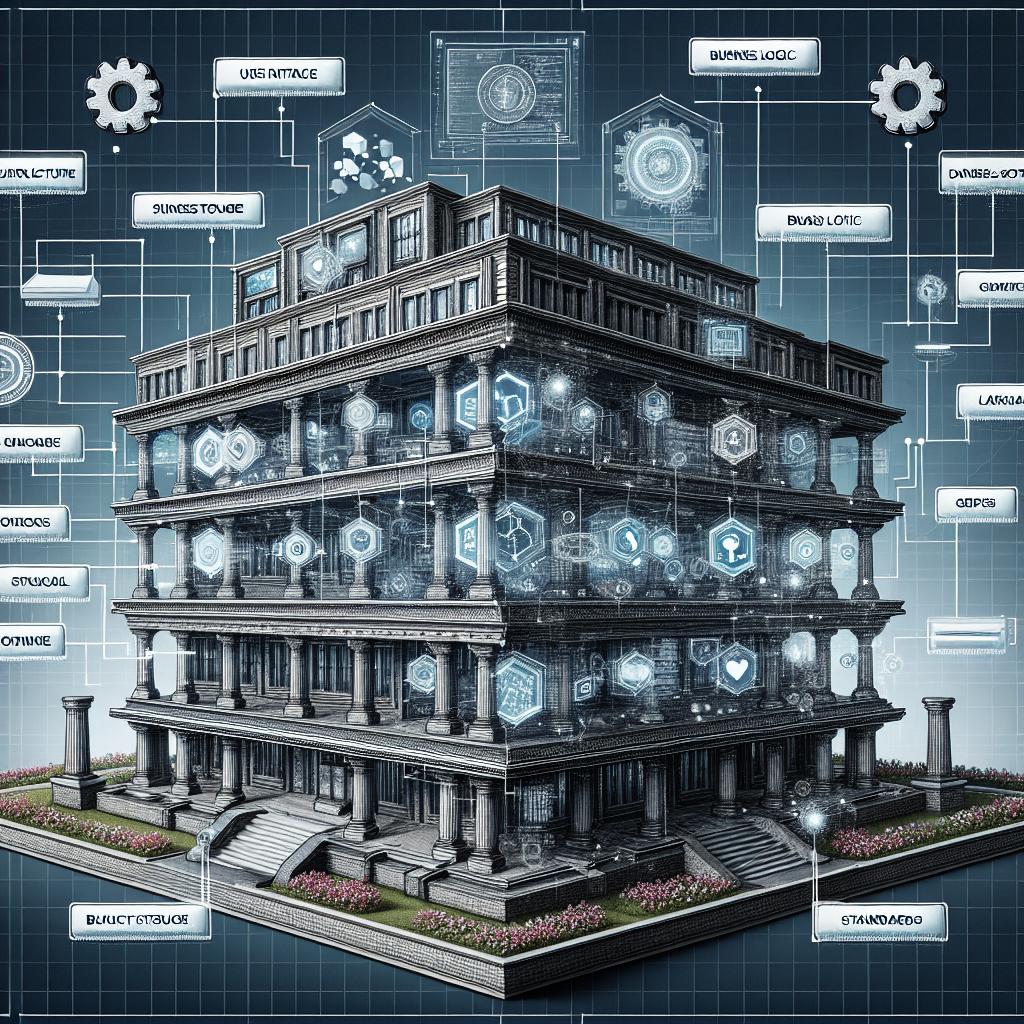
Layered architecture, also known as n-tier architecture, divides a software application into distinct layers that each have specific roles and responsibilities. Typically, these consist of presentation, business, data, and sometimes additional layers like service or integration layers. The layers communicate with one another in a linear manner, which simplifies the architecture and fosters separation of concerns.
One of the primary advantages of this pattern lies in its simplicity and ease of management. Layered architecture promotes code reusability since each layer can be modified or replaced independently. This makes it particularly beneficial for applications requiring ongoing changes or updates because it isolates changes to specific layers without impacting the entire system.
Best Usage
Layered architecture excels in traditional desktop applications and enterprise systems with multiple users performing various functions. It is highly applicable where systems require a structured and straightforward approach, particularly in scenarios involving data-heavy operations and consistent business logic processing. However, it can become cumbersome in highly distributed or real-time software systems due to potential performance bottlenecks at the boundaries between layers.
2. Microkernel Architecture Pattern
The microkernel architecture pattern, also recognized as the plug-in architecture, separates a minimal, core system functionality from additional, extendable functionality. This core, or kernel, provides the essential services required by the plug-ins to operate, enabling a high degree of system flexibility and extensibility.
Microkernel architecture is particularly advantageous for applications designed to offer a wide range of functionalities that can evolve over time. By isolating the core from ancillary operations, developers can introduce new features or customize existing ones without disrupting the core system, facilitating easier maintenance and upgrades.
Best Usage
The microkernel architecture pattern is best applied to systems where extensibility is crucial, such as in product-based applications, plugins, or applications offering different service packages. It suits environments requiring high modularity, allowing organizations to deploy applications that scale in functionality without overhauling the main system. The flexibility inherent in this approach is well-suited to platforms where additional functionalities might vary based on user requirements.
3. Microservices Architecture Pattern
Microservices architecture is a design pattern where a software application is constructed as a collection of loosely coupled, independently deployable services. Each service performs a specific business function and communicates with other services through well-defined APIs, usually over HTTP or messaging protocols.
This pattern allows for rapid, iterative development, enhancing the agility of development teams. Microservices are ideal because they promote autonomy, with small teams managing their services end-to-end. Furthermore, they can enhance system reliability and scalability by separating services and enabling independent scaling based on demand.
Best Usage
Microservices architecture is highly effective in complex applications that demand frequent and rapid deployments with minimal risk. Organizations favoring continuous integration and delivery (CI/CD) pipelines can benefit significantly from microservices. This approach is particularly beneficial for large enterprises and online services equating to a digital business model where components must evolve and scale according to dynamically changing demands and user interactions.
4. Event-based Architecture Pattern
Event-based architecture, or reactive architecture, focuses on event generation to trigger and respond to different system actions. It comprises event producers, event brokers, and event consumers, facilitating a non-blocking and highly responsive system.
This pattern promotes the asynchrony of operations and distribution of events, allowing systems to handle asynchronous data flows efficiently. It is used widely in systems requiring real-time data processing and streaming. Event-driven systems easily manage varying loads and complex event processing by utilizing event queues and handlers.
Best Usage
Event-based architecture is optimal for applications requiring real-time data processing, such as IoT systems, data streaming platforms, and real-time analytics applications. It performs well in systems needing highly responsive and low latency operations. Its scalable and resilient nature aligns with systems supporting high-throughput data processing, such as financial services and telecommunication systems.
5. Space-based Architecture Pattern
Space-based architecture, also known as cloud-based or grid-based architecture, distributes processing and data across multiple servers to handle large volumes of data and workloads efficiently. This pattern covers frequent peaks in demand, making it a robust choice for heavy-duty applications.
The architecture typically comprises a processing unit and a shared space server that maintains state and replicates data. By decentralizing memory and computational power, space-based architecture ensures system stability under unpredictable loads and addresses challenges related to scaling.
Best Usage
Space-based architecture is best suited for high-volume transaction systems, such as e-commerce platforms, where scalability and performance are crucial. The architecture can also be applied to applications dealing with massive parallel computations and where the distribution of tasks allows for efficient data and resource management.
Next Steps
| Architecture Pattern | Characteristics | Best Use Cases |
|---|---|---|
| Layered Architecture | Divides system into functional layers; promotes separation of concerns and code reusability. | Enterprise applications, data-heavy operations. |
| Microkernel Architecture | Minimal core system with plug-in extensions; supports modularity and flexibility. | Product-based applications, extensible systems. |
| Microservices Architecture | Individual services communicate over network; enables scalability and rapid deployment. | Complex applications, CI/CD pipelines, digital enterprises. |
| Event-based Architecture | Event-driven communication; handles asynchronous data flows efficiently. | Real-time data processing, IoT systems. |
| Space-based Architecture | Decentralized processing and data distribution; manages large volumes and scaling. | High-volume transactions, e-commerce platforms. |
“`